
The Multiple Histocompatibility Complex (MHC)
- genetics
- mhc
- dna-romance
How Human Leukocyte Antigens Influence Partner Choice?
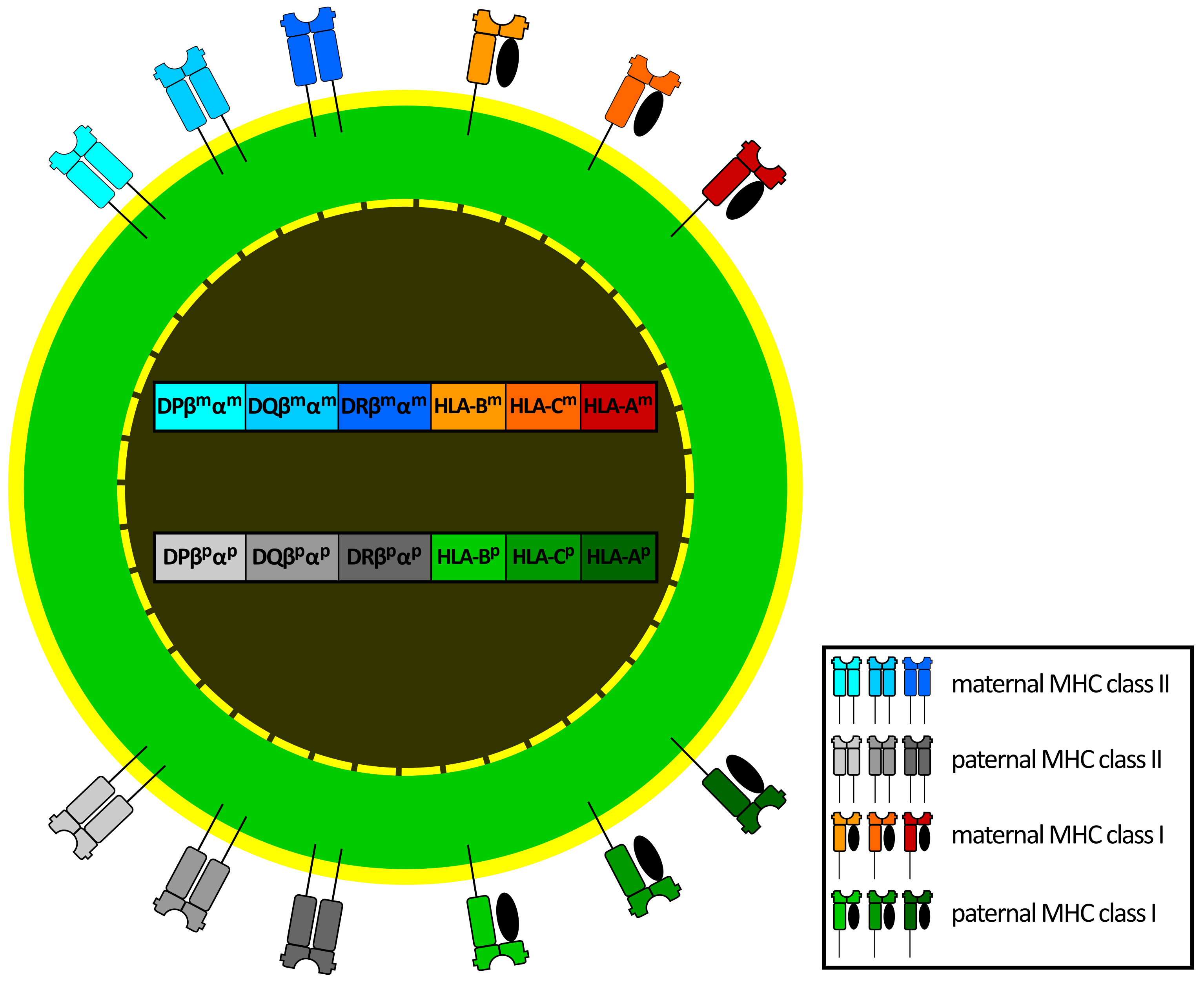
The major histocompatibility complex (MHC) refers to section on Chromosome 6 containing hundreds of genes (figure 1) , including the human leukocyte antigen (HLA) genes.
The MHC codes for proteins on surface of nucleated cells, including white blood cells (hence the name "human leukocyte antigen”).
The MHC proteins capture and present foreign substances to your T-cells.
The MHC is also responsible for tissue and organ compatibility between people, hence the name "major histocompatibility".
Figure 1. Codominant expression of HLA genes
MHC proteins are generally divided into three “classes”.
MHC class I proteins get expressed on most cells of the body and help us fight off viral infections.
The MHC class I proteins include those encoded by HLA-A, HLA-B, and HLA-C.
MHC class II proteins are expressed on immune cells such as B-cells, activated helper T-cells, macrophages, and dendritic cells; these cells help us fight off bacterial infections through producing antibodies.
The MHC class II encodes HLA-DR, HLA-DQ, and HLA-DP. There are also MHC class III proteins which support our immune cells.
The structure of each class of proteins is different – while MHC class II has 2 chains (A chain and B chain), MHC class I only has a single large chain, coupled with a macroglobulin. As such, when naming MHC class II proteins, an additional component is sometimes added to specify the chain.
HLA Naming & Typing
The HLA 2010 naming convention is the one currently widely used to name MHC proteins and the HLA genes which encode for them. The convention identifies the HLA gene, allele group/allotype,
specific protein, and any substitutions/mutations. Each of these fields is specified using a numeric value, assigned based on the order in which they are discovered. You can learn more about
the 2010 HLA naming convention here.
A database of all discovered HLA types to date can be found here.
It has been found that couples with very different HLA types and differences in their MHC genes tend to have more fulfilling relationships, what we at DNA Romance like to call “romantic chemistry”, also known as genetic compatibility.
What is genetic compatibility?
Genetic compatibility refers to the match between the genes of two individuals, particularly with respect to their potential to have children together. Certain genetic combinations are more compatible and can result in healthier offspring.
One method is to test for genetic compatibility is the presence or absence of certain genetic markers, such as HLA (human leukocyte antigen) markers, which are involved in the immune system.
Individuals with more dissimilar HLA profiles may be more genetically compatible, as this could result in a child with a more diverse immune system.
Another way to evaluate genetic compatibility is through genetic testing for inherited disorders. Couples who are considering having children may choose to undergo genetic testing to determine their risk of passing on certain inherited disorders to their offspring. This can help them make informed decisions about their fertility options and the potential risks and benefits of having children together.
It is important to note that genetic compatibility is not the only factor that determines the health and well-being of a child. Other factors, such as the overall health and lifestyle of the parents, can also have a significant impact on the health of a child.
Let DNA Romance can help you find your genetic matches today!
Related articles
Romantic Attraction and Finding Your Perfect Match
Have you ever wondered how DNA dating can help you find true love? Read the inspiring story of a couple who used DNA analysis to confirm their love and ultimately tie the knot. Could you be next?
The Genes For Love
Genes inside the Major Histocompatibility Complex (MHC) shape immune function and partner choice. Diversity in MHC is what your body is searching for when scent guides attraction.
Ten Ways DNA Influences Our Relationships
DNA can significantly influence our relationships. Discover ten ways our genetic makeup affects how we interact with others, from romantic chemistry to compatibility.